
A Webbing Journey
Fire Totem Games GmbHAdventure
4.8854.00 Reviews
- Version
- 0.15.3
- Installs
- 5.00M
- Age Rating
- Everyone
Screenshots
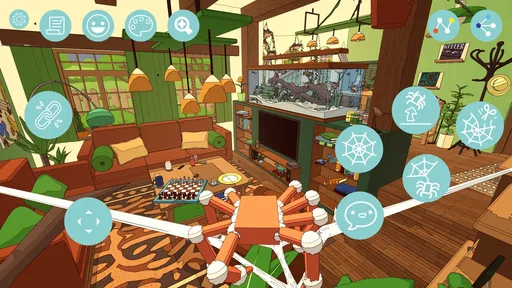
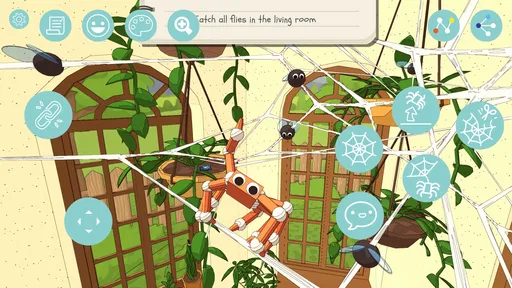
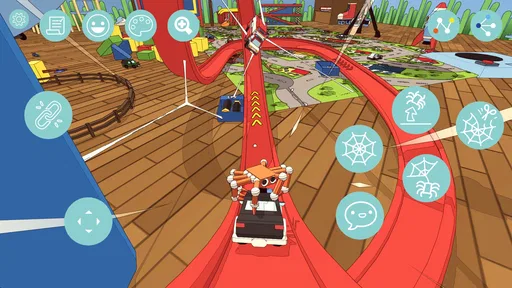
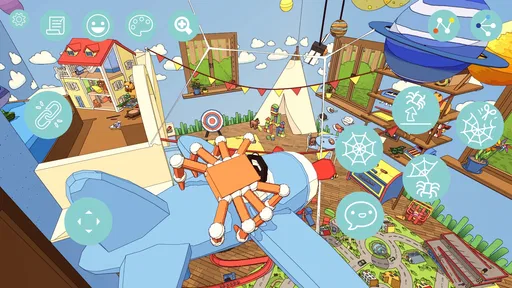
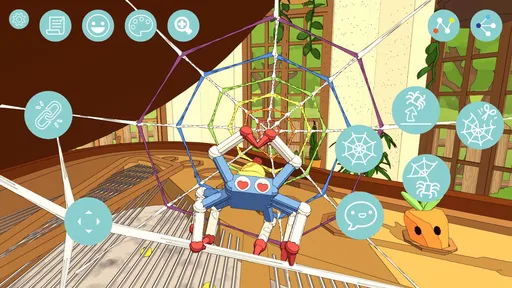
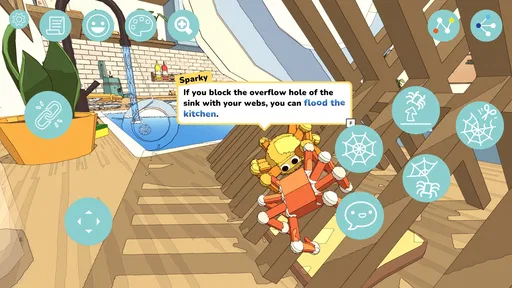
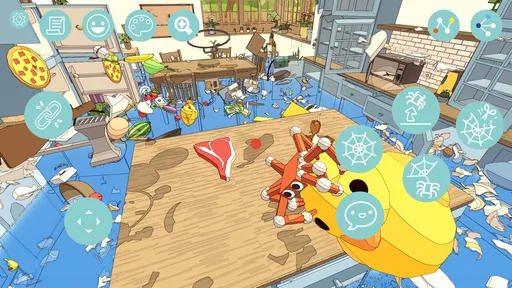
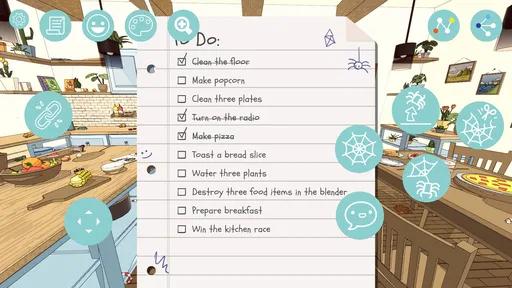
Our Review of A Webbing Journey
 Analysis by Appyee
Some games ask for your attention through danger, speed, or complicated systems. A Webbing Journey takes a gentler route: you play as a small spider, move through a physics-driven world, and use webbing as the main way to interact with your surroundings. I found its appeal in the simple pleasure of experimenting. A short session can become a careful attempt to reach a difficult spot, recover from an awkward swing, or discover a more efficient way through an obstacle.
That makes this adventure game a good fit for players who enjoy playful physics more than constant combat. It is free to download, rated for Everyone, and works on Android devices running version 7.1 or later. Fire Totem Games GmbH developed it, and the game has built a sizeable audience, with more than five million installs and an average score of 4.6 from roughly twenty-one thousand ratings. Those figures suggest that the idea has connected with many players, but they do not replace the more important question: does the web-swinging feel enjoyable after the first few minutes?
In my experience, the answer depends heavily on what you want from an adventure game. If you like relaxed discovery, tactile movement, and the satisfaction of solving problems with positioning rather than a long list of abilities, this is an inviting choice. If you want a sharply directed story, competitive rankings, or predictable platforming, its physics-first design may feel loose and occasionally frustrating.
How the webbing turns movement into the main puzzle
The central idea is immediately understandable. The spider is small, the environment is larger, and webbing gives you a way to connect movement with the world around you. Instead of simply walking from one marked point to another, you are encouraged to think about where a web can attach, how much momentum you have, and what your next landing area should be.
That changes the rhythm of play. A normal platform game often asks whether you can perform a jump at the correct time. Here, the question is more often whether you can create a useful line through space. A good attempt can feel almost improvised: attach, swing, release, adjust, and try to turn a mistake into another route. When the physics cooperate, the result is satisfying because the solution feels like something I worked out rather than something I merely followed.
The small spider is also an important part of the game’s personality. The scale makes ordinary movement seem meaningful. A gap that would be insignificant in a conventional adventure can become a real navigational problem when your character is tiny and dependent on webbing. That perspective gives the sandbox structure without requiring a complicated premise.
I would not describe the controls as instantly effortless. Physics-based movement always creates a learning period, and this game asks you to understand momentum rather than rely only on reflexes. Early attempts may feel imprecise when you release too soon or attach at an unhelpful angle. I recommend spending time learning how the spider behaves before trying to rush through an area. The fastest route is rarely obvious until you understand how to set up the next movement.
Small adjustments matter more than dramatic swings
One useful habit is to treat webbing as a positioning tool, not only as a way to cross large gaps. A short connection can help stabilize a route or prepare the spider for the next move. Players who only look for spectacular swings may miss safer, more controlled solutions. I found that making a modest adjustment before committing to a longer movement often saved time and reduced the need to restart an attempt.
Another practical tip is to look beyond the immediate landing point. The best attachment location is not always the one that gets you closest to where you are standing. Sometimes it is the point that leaves the spider aligned for the following move. Thinking one step ahead makes the game feel less like trial and error and more like planning a route through a physical space.
This is where the sandbox character becomes valuable. The game gives room for experimentation instead of forcing every challenge into one narrow solution. That freedom is a strength for curious players, but it can also create uncertainty. When a move fails, it is not always obvious whether I chose the wrong route, mistimed the release, or simply needed a better angle. The game’s charm comes partly from that ambiguity, although players who prefer explicit instructions may find it less comfortable.
A good match for short, low-pressure play
I can easily imagine playing this during a short break, especially when I want something interactive without committing to a demanding competitive match. The basic loop supports brief experiments: enter a situation, test a web connection, adjust the approach, and try again. It has the kind of tactile problem solving that can be relaxing when I am willing to accept a few imperfect attempts.
It is less suitable when I am looking for a fast reward every few seconds. Physics-based games often ask the player to observe and repeat, and that naturally creates pauses between successful moments. A person who dislikes retrying a movement or watching a plan collapse may lose patience. The game is at its best when failure feels informative rather than wasted.
For younger players, the Everyone rating makes the concept approachable from a content standpoint. The cute presentation and simple premise are less intimidating than many action adventures. Still, the movement itself may require patience. A child may understand what the spider should do but need time to develop the fine control needed to make it happen consistently.
Free access, spending, and the question of fairness
The game is free to play, with optional in-app purchases listed from $1.99 to $10.99 per item. That is the spending context I would keep in mind before installing it. The download does not require an upfront purchase, so it is easy to test the movement and decide whether the physics suit you. At the same time, anyone who prefers completely paid games should be aware that optional purchases are part of the experience.
I do not think it is fair to judge the game’s competitive balance by assuming systems that are not established here. This is primarily a physics-based adventure and sandbox experience, not something I would approach as a competitive ladder. The important practical point is that your enjoyment should not depend on spending before you know whether you like the controls. I would play the free version first, learn the movement, and only consider a purchase if it offers something I genuinely want rather than treating it as a requirement for basic enjoyment.
That approach also protects against a common mistake with free games: spending because the first session feels charming, then discovering that the core loop is not a long-term match. Here, the movement is the product’s defining feature. If swinging, attaching, and correcting your trajectory already feel rewarding, optional spending may be easier to evaluate calmly. If the controls feel awkward from the start, buying something is unlikely to solve the underlying mismatch.
For fairness, I would separate three questions. First, can I enjoy the basic spider movement without paying? Second, does progress remain satisfying when I play at my own pace? Third, do the available purchases feel like extras rather than pressure? The listed purchase range answers only the financial part. It does not, by itself, explain how purchases affect progression, so I would avoid making assumptions and would check the in-game wording carefully before confirming anything.
Where pressure can appear even in a relaxed adventure
A physics sandbox can create its own kind of pressure without needing a timer or an opponent. When I have invested several attempts in a route, I naturally want the next try to succeed. That can make a small control mistake feel more annoying than it really is. My best advice is to change the route after several failed attempts instead of repeating the same movement with slightly different timing. The game rewards experimentation more than stubborn repetition.
There is also a trade-off between freedom and clarity. A guided adventure usually tells me where to go and what ability to use next. A web-based sandbox may offer more room to improvise, but I have to supply some of the direction myself. That is enjoyable when I want to explore, yet less appealing when I am tired and simply want a clear sequence of objectives.
Players who want a traditional platformer may prefer a game with fixed jumps and highly predictable character handling. Players who want a competitive game may be better served by a title built around direct matches and transparent rankings. This one makes more sense for someone who enjoys the feeling of mastering a strange movement system, even if the mastery comes through gradual correction rather than a formal skill tree.
What I would check before spending
My personal routine would be simple. I would install the free game, play long enough to test several different kinds of movement, and pay attention to whether mistakes teach me something. I would then look at the purchase descriptions inside the game before buying. The listed prices are clear, but the value depends on what each item changes or adds, and that is something I would want to understand in context rather than guess.
I would also consider the device itself. The minimum Android requirement is version 7.1, but compatibility on paper does not guarantee that every phone will feel equally comfortable for physics-based play. Screen size, touch response, and general performance can influence how easy it is to make small corrections. If the spider feels difficult to control, I would first check whether the issue is my technique or the way my device responds before deciding that the game is not for me.
Who should play it, and who should choose something else?
I would recommend this to players who enjoy gentle experimentation, unusual movement, and compact problems that can be solved in more than one way. It is particularly appealing if you like games where the environment is not just scenery but part of the control system. The webbing gives every space a practical question: where can I connect, what path does that create, and how can I use the next movement to improve my position?
It is also a strong choice for someone who wants an adventure game that feels different from the usual running, jumping, and combat formula. The spider perspective gives the setting a distinctive character, while the physics provide the main source of challenge. You do not need to memorize a complicated control scheme to understand the goal, but you do need to accept that precision may come through practice.
I would hesitate to recommend it to players who need a strong narrative to carry the entire experience. The appeal I found is in movement and discovery, not in expecting a conventional story-driven adventure. I would also steer highly competitive players toward another category, because the pleasure here comes from personal improvement and experimentation rather than proving superiority over other people.
It may not be ideal for anyone who dislikes uncertainty in controls. Some players interpret an unexpected swing as part of the fun; others see it as a lack of precision. Neither reaction is wrong. The best way to decide is to focus on your usual preference: if you enjoy learning how a simulated system behaves, you are more likely to stay with it. If you want every input to produce a tightly predictable result, a conventional platformer will probably be a better fit.
Three practical ways to get more from the sandbox
- Plan the exit before the attachment. Choose web points based on where the spider needs to go next, not only on what is easiest to reach immediately.
- Use failed attempts as route information. If the same swing keeps ending badly, change the connection point or approach instead of repeating the timing.
- Separate learning from rushing. Spend a few attempts observing momentum and spacing, then make the committed run once the movement feels familiar.
These habits sound simple, but they address the main difference between this game and a standard platformer. You are not only controlling a character; you are shaping the path that character will travel. That makes good preparation more useful than frantic reactions.
Version, audience, and long-term confidence
The current version is 0.14.9, and the game was released on May 18, 2023. I mention that because version information matters when judging a physics-based title: small changes can affect feel, stability, or the way players approach familiar situations. Keeping the app updated is sensible, particularly if you encounter behavior that seems inconsistent.
The audience response is encouraging without being a reason to ignore personal fit. An average rating of 4.6 and a large number of ratings indicate that many players enjoy what Fire Totem Games GmbH is attempting. The game’s popularity also makes it easier to see this as an established choice rather than an obscure experiment. Still, a popular physics game can remain divisive because control preference is intensely personal.
My remaining caution concerns expectations. The store summary presents a cute spider in a physics-based sandbox, and that is a useful description of the core idea, but it should not be interpreted as a promise of a conventional adventure structure. I would install it expecting to play with movement and webbing first. That mindset makes the game’s slower, more exploratory moments easier to appreciate.
For families, the Everyone rating is reassuring from a content perspective, while the free entry point makes trying it straightforward. I would still let a younger player experiment with the controls rather than assuming the game will be immediately easy. The concept is accessible; the physics may take longer to master.
My verdict on the web-swinging experience
I enjoyed A Webbing Journey most when I stopped treating each obstacle as a test of speed and started treating it as a small physics problem. The game’s strongest quality is the way webbing turns ordinary movement into something expressive. A successful route feels personal because I chose the angle, the attachment, and the moment to continue.
Its limitations are closely tied to that same strength. The physics can demand patience, the best route may not be obvious, and players who want perfectly predictable controls may feel friction quickly. The free-to-play structure also deserves a measured approach: the game can be tried without an upfront price, while optional purchases range from $1.99 to $10.99 per item. I would not spend until I understood exactly what I was buying and had already decided that the core movement was worth returning to.
Overall, I think it is a worthwhile adventure game for curious players who want a cute, unusual sandbox rather than a standard action formula. I would recommend giving it a fair trial on a compatible Android device, especially if you enjoy discovering solutions through movement. The real test is whether experimenting feels rewarding to you; if it does, this little spider can provide a surprisingly absorbing way to spend a few minutes or settle into a longer session.
Privacy and Permissions
See what permissions an app requests and how it handles your data.
- Other
- view network connections, full network access, prevent device from sleeping, Google Play license check
Verdict
Strengths of A Webbing Journey
- Creative web-swinging gameplay feels fresh and satisfying.
- Short levels make it easy to enjoy during quick breaks.
- Colorful visuals give the game a charming, playful atmosphere.
- Simple controls are accessible for younger and casual players.
- Exploration rewards curiosity beyond simply reaching the finish.
Limitations of A Webbing Journey
- Some stages may feel repetitive after the initial novelty fades.
- Precision movement can be frustrating on smaller phone screens.
- The difficulty curve is not always consistent between levels.
- Limited replay value may reduce long-term appeal for some players.
- Performance may vary on older or less powerful devices.
Similar Picks in This Category
View All
Roblox
Roblox Corporation4.2

Pokémon GO
Niantic, Inc.3.5

Ninja warrior: legend of adven
TOH Games4.6

Ninja Arashi
Black Panther4.6

Eyes - The Horror Game
Fearless Games sp. j.4.5

Critical Action:Gun Strike Ops
FPS Shooter & Action Game4.3
Frequently Asked Questions
What is A Webbing Journey about?
A Webbing Journey is a casual adventure game centered on a small spider exploring colorful environments, solving light puzzles, collecting items, and overcoming environmental obstacles. Its appeal comes from combining simple platforming with exploration and a charming presentation. Before downloading, players should expect a relaxed experience focused more on discovery, movement, and atmosphere than on intense combat or highly competitive gameplay.
Is A Webbing Journey suitable for children?
The game is generally suitable for younger players because its presentation is colorful, its controls are approachable, and its challenges are designed around exploration and simple problem-solving. However, parents should still check the current store rating, privacy information, and any advertising or in-app purchase details for their specific device. Difficulty can vary, so younger children may occasionally need assistance.
Does A Webbing Journey require an internet connection?
A Webbing Journey appears designed primarily as a self-contained single-player experience, so many of its core activities can typically be enjoyed without a constant internet connection. Nevertheless, an internet connection may be required for the initial download, updates, advertisements, analytics, cloud-related features, or purchases. It is best to confirm the latest store description before relying on offline play.
Are there in-app purchases or advertisements in A Webbing Journey?
The availability of advertisements, optional purchases, or paid content may depend on the version and platform where A Webbing Journey is downloaded. Users should review the Google Play or App Store listing before installing, especially when the game will be played by children. Checking the purchase settings on the device is also recommended, as store policies and monetization features can change after updates.
What devices are compatible with A Webbing Journey?
Compatibility depends on the operating system, device model, available storage, and the version published for Android or iOS. Before downloading, check the official store page for the required operating-system version and any stated hardware limitations. A newer device will usually provide smoother performance, while older phones or tablets may experience longer loading times, reduced visual quality, or occasional performance issues.
Play our best games!


